

Materials
Material properties
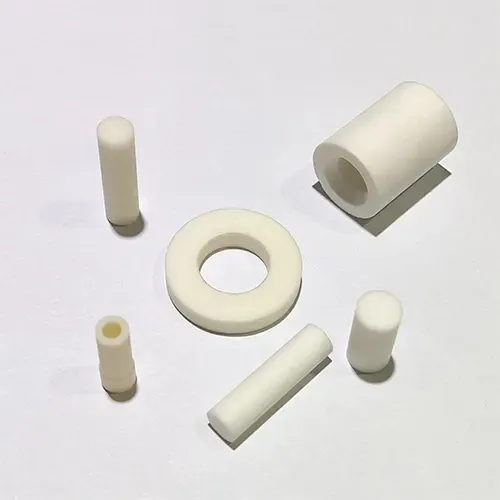
Precision ceramic materials combine nanoscale powders with advanced sintering processes to provide excellent high-temperature resistance, high hardness and strong corrosion resistance. They outperform traditional materials in extreme environments and support precise, complex custom structures for varied applications. Their biocompatibility, electrical insulation and non-magnetic properties help improve equipment stability and durability, offering innovative material solutions for precision industries.
Material property comparison
Alumina-toughened zirconia (ATZ)
Zirconia-toughened alumina (ZTA)
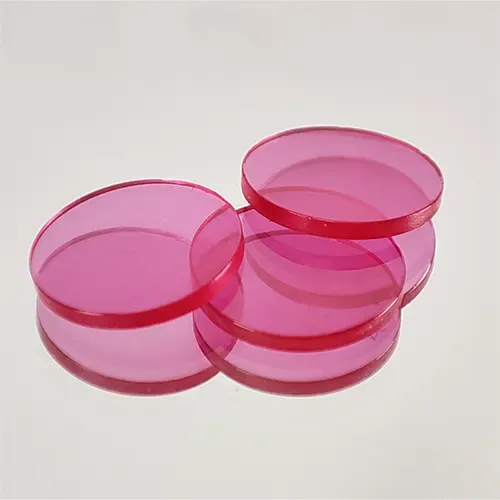
Ruby
Sapphire
Aluminum nitride
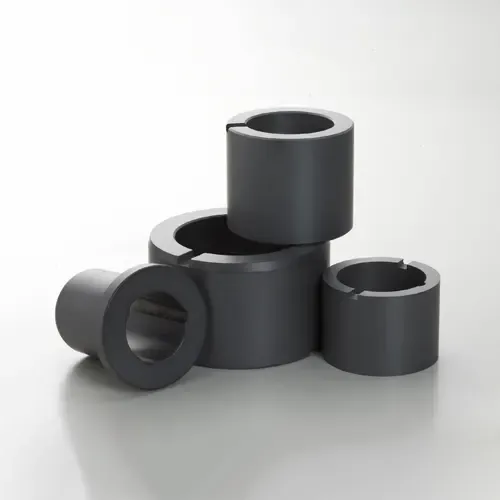
Silicon nitride
Silicon carbide
Chart values are typical reference values or range midpoints, intended only for preliminary material selection. Actual properties vary with material grade, purity, forming method, sintering process and test standard.
| Property | Unit | Material | Material | Material | Material | Material | Material | ||||||||
|---|---|---|---|---|---|---|---|---|---|---|---|---|---|---|---|
| Alumina | Zirconia | Gemstones | Aluminum nitride | Silicon nitride | Silicon carbide | ||||||||||
| 96% | 99% | 99.9% | 99.99% | Yttria-stabilized zirconia | Alumina-toughened zirconia (ATZ) | Zirconia-toughened alumina (ZTA) | Blue zirconia | Black zirconia | Ruby | Sapphire | |||||
| Color | / | White | White | Ivory yellow | Ivory yellow | White | White | White | Blue | Black | Red | White | White | Black | Black |
| Density | g/cm3 | ≥3.74 | 3.9 | 3.9 | 3.9 | ≥6.0 | 5.6 | 5.6 | ≥6.0 | ≥6.0 | 3.95 | 3.95 | 3.28 | 3.2 | 3.15 |
| Water absorption | % | 0 | 0 | 0 | 0 | 0 | 0 | 0 | 0 | 0 | 0 | 0 | 0 | 0 | 0 |
| Flexural strength | Mpa | ≥300 | 300 | 350 | 380 | 800-1400 | 800-1400 | 800-1400 | 1000-1400 | 1000-1400 | 800-1000 | 800-1000 | 350 | 610 | 300 |
| Vickers hardness | Gpa | ≥15 | 15 | 18 | 12 | 14 | 14 | 14 | 14 | 14 | 14 | 14 | 9 | 13.9 | 20 |
| Fracture toughness | MPa m1/2 | 3 | 3 | 4 | 4 | 4 | 6 | 6 | 4 | 4 | 5 | 5 | 4 | 5 | 4 |
| Thermal conductivity | W/mK | ≥20 | 20 | 32 | 28 | 1.5 | 2 | 2 | 1.5 | 1.5 | 25 | 25 | 180 | 23 | 45 |
| Thermal expansion coefficient | 1*10-6 mm/c | 6.6 | 7.2 | 7.3 | 7.3 | 9.8 | 10 | 10 | 9.8 | 9.8 | 8.5 | 8.5 | 4.5 | 2.6 | 4 |
| Heat resistance temperature | ℃ | 1600 | 1600 | 1600 | 1600 | 2000 | 1200 | 1200 | 2000 | 2000 | 1900 | 1900 | 1500 | 1500 | 1500 |
| Thermal shock resistance | △T | 200-300℃ | 300-500℃ | 300-600℃ | 300-600℃ | 400-1000℃ | 400-800℃ | 300-700℃ | 400-1000℃ | 400-1000℃ | 200-300℃ | 200-300℃ | 200-300℃ | 800-1000℃ | 700-900℃ |
| Dielectric constant | / | 9.4±0.3 | 9 | 9.8 | 10 | 26 | 10 | 10 | 26 | 26 | 9.3 | 9.3 | 8.6 | 8.6 | 9.4 |
| Dielectric loss | *10-4 | ≤3 | 2 | 2 | 2 | 0.01 | 0.01 | 0.01 | 0.01 | 0.01 | 1 | 1 | 1 | 1 | 1 |
| Volume resistivity | Ω.cm | >1014 | 1014 | 1014 | 1015 | 1012 | - | - | 1012 | 1012 | 1014 | 1014 | 1011 | 1014 | 106 |
| Breakdown voltage | KV/mm | >12 | 12 | >12 | >12 | 5 | 8 | 8 | 5 | 5 | 10 | 10 | 12 | 12 | 12 |
The data above are typical reference values intended only for preliminary material selection. Actual properties vary with material grade, purity, forming method, sintering process and test standard. For grade-specific data, refer to the agreed technical specification.